Getting ready to sail
First Cruise Packing List: What to Bring and What to Leave Home
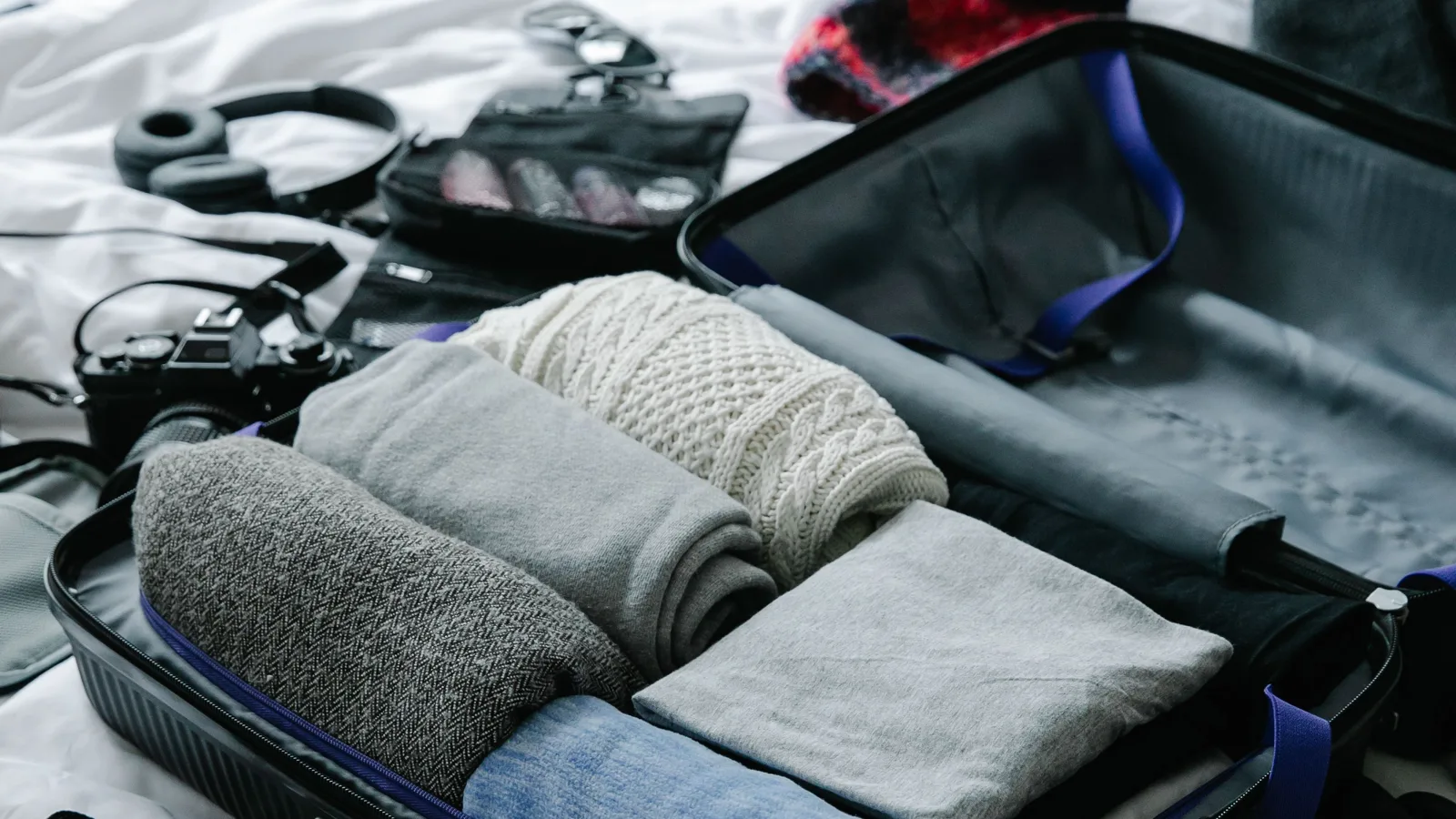
A useful first cruise packing list starts with three decisions: what you need before your suitcase reaches the cabin, what fits your actual itinerary, and what your cruise line will allow through security. Packing more does not solve all three.
This guide uses Royal Caribbean® and Carnival® as specific examples. Their rules differ; they are not a universal cruise packing policy. Check your own sailing's instructions before closing the bag. Still choosing a cabin? Start with First Cruise Tips: What to Decide Before You Book the Cabin.
Your quick packing checklist
- Hand-carry: required boarding documents, medications, valuables, phone and permitted charger, swimsuit, first-afternoon clothes and sun protection.
- Pack for the itinerary: repeatable outfits, sleepwear, underwear, comfortable shoes, a light layer, toiletries and a small day bag. Add excursion-specific gear only after checking the activity instructions.
- Check first: adapters, power banks, drinks, snacks, medical equipment and baby gear. Permission on your last trip is not permission on this one.
- Leave home: clothing irons, garment steamers, candles and anything your line lists as prohibited.
Lay these groups out separately. If an item has no planned use and is not an essential or a sensible backup, reconsider the space it takes.
1. Make the first afternoon independent of your suitcase
Royal Caribbean says checked bags may arrive after sailaway. Its luggage guidance recommends carrying boarding documents and medications yourself, keeping medicines in original labeled containers, and bringing at least three extra days' medication in case plans change. It also recommends a change of clothes and swimwear.
Use a carry-on you can manage through check-in, lunch and any wait for cabin access. Keep documents in an easy-to-reach compartment; do not bury them under beach gear. Before handing a suitcase to a porter, check that every traveler's essentials are still with the group.
If you are flying to the port
Airport screening and cruise-terminal screening are separate. SEA Airport's TSA guidance describes the usual carry-on liquids rule: containers of 3.4 ounces/100 ml or less in one quart-size bag per traveler, with exemptions for medication and infant or child nourishment. Check the linked TSA instructions for your circumstances, plus your airline's baggage and battery rules.
Hypothetical example: a couple flies in before a seven-night cruise. They keep documents and medicines in their personal bags, pack small toiletries for airport screening and put larger permitted toiletries in checked luggage. At the hotel, they reorganize their cruise carry-on for the first afternoon. That second packing check helps prevent an essential from leaving with the porter.
2. Match your bags to the transport, not the trip length alone
Royal Caribbean's policy recommends fewer pieces, permits only TSA-approved luggage locks and requires carry-ons to fit terminal screening equipment. Cabin access may not be immediate.
Carnival's luggage section specifies bags no heavier than 50 pounds, no more than 16 inches high by 24 inches wide when flat, and unlocked for screening. Check your airline separately.
Choose clothes that work together rather than a separate outfit for every imagined activity. Build around daytime, dinner and port-day needs. Read your ship's evening dress code and each excursion's footwear instructions; a beach sandal and a walking shoe serve different purposes. A lightweight layer can be useful without committing you to a second bulky bag.
3. Check electrical items one by one
A “cruise-friendly” label is marketing, not clearance. Read the actual specification on the device and compare it with your line's current rules.
- Royal Caribbean: its prohibited-items policy bans power strips, extension cords, multi-plug outlets and baby monitors. It makes a specific exception for device and USB chargers bearing recognized U.S. or European conformity certification.
- Carnival: see its electrical-device and personal-electronics sections. Power banks must be carried on, kept away from heat and sunlight, and never left charging unattended.
The FAQ below explains the power-strip contrast. If you only need to charge a phone, consider whether a compliant charger already meets the need before adding another accessory. Both lines prohibit garment steamers and clothing irons.
4. Count drinks by size, packaging and traveler
For boarding day, Royal Caribbean permits up to 12 standard 17-ounce nonalcoholic cans, bottles or cartons per stateroom in carry-on. It also permits milk and distilled water for infant, medical or dietary use.
Carnival's U.S.-departure beverage policy allows up to 12 sealed cans or cartons, each no larger than 12 ounces/354 ml, per person in carry-on; glass or plastic beverage bottles are prohibited. Food must be factory-sealed, unopened and prepackaged.
Do not transfer an allowance from one line to another. Check departure-market exceptions, special dietary needs and wine rules before shopping. Being allowed to bring a bottle does not mean serving it is free; read the supplier's corkage terms. For the broader spending question, see What's Included in a Cruise Fare.
5. Leave questionable items out; arrange special equipment early
Both lines publish prohibited-item lists: Royal Caribbean and Carnival. Review these before packing sharp tools, speakers or recreational equipment. Do not assume that airport clearance means ship clearance.
Scissors are a good example: Royal Caribbean's narrow exception covers facial-hair grooming scissors with blades under four inches. Carnival lists scissors as prohibited and requires prior approval for certain craft scissors.
For medical equipment or baby supplies, contact the line early with the exact item and its power or storage needs. Royal Caribbean requires case-by-case review of baby bottle warmers and sanitizers. Keep any written approval accessible with your travel documents. Do not substitute a general packing article for an equipment-specific answer.
First cruise packing FAQs
What should I pack in my carry-on for a cruise?
Keep boarding documents, medications, valuables, a phone charger, a swimsuit and a change of clothes with you. Royal Caribbean warns that checked luggage can arrive after sailaway. Choose a bag you can comfortably keep with you while waiting for cabin access.
Can I bring a power strip on a cruise?
Check your line before packing one. Royal Caribbean prohibits power strips and extension cords. Carnival generally permits power strips, multi-outlet adapters and extension cords without surge protection, subject to safety review. A product marketed for cruises is not proof of permission.
Can I bring wine on a cruise?
Royal Caribbean permits one sealed 750 ml bottle of wine or champagne per guest of drinking age on embarkation day. Carnival's U.S.-departure policy permits one sealed 750 ml bottle per person aged 21 or older, in carry-on luggage. Confirm the applicable policy for your departure market; exceptions and corkage conditions apply.
Can I bring a clothes steamer or iron?
No. Royal Caribbean and Carnival prohibit clothing irons and garment steamers. Pack clothes that tolerate folding, and check your ship's laundry options if you need pressing.
How much luggage can I bring on a cruise?
Check both the cruise line and any airline before choosing a suitcase. Royal Caribbean recommends limiting the number of pieces. Carnival suggests one bag for 3–5 days or up to two for longer cruises, with each bag no heavier than 50 pounds. Check dimensions and screening requirements too.
Policy references for these answers: Royal Caribbean luggage, beverages, prohibited items, and Carnival's corresponding help sections.
Bring your remaining questions to the planning conversation
Tell Casie Keller your ship, sailing date, travelers and the item you are unsure about. A specific question—such as whether an approved device needs an adapter—is easier to resolve than a generic request for everything you might need.
AI can organize a checklist; current supplier instructions establish what you can bring. Recheck the list shortly before travel, especially if your ship or itinerary changes.
Independent Affiliate of Atlas Coast Travel Group
Ready to work through your cruise plans?